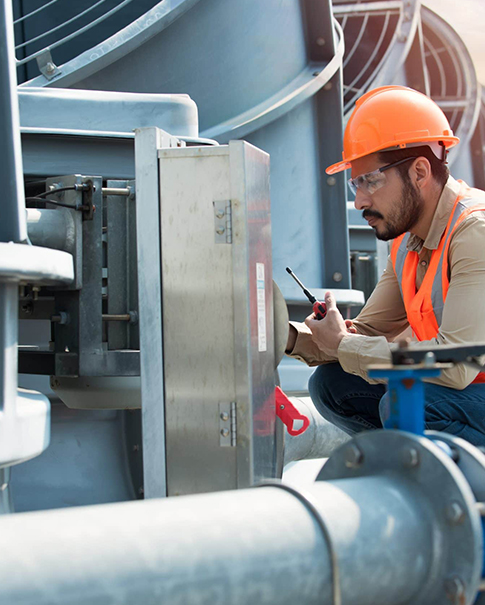

In zinc alloy die casting, temperature control affects much more than the mold itself. It influences metal flow, solidification, surface finish, dimensional consistency, cycle time and mold service life. When temperatures fluctuate from one production cycle to another, manufacturers may experience inconsistent parts, increased scrap and more frequent process adjustments.
A reliable temperature control system helps maintain repeatable production conditions. For zinc alloy die casting manufacturers, the goal is not simply to heat or cool the mold as quickly as possible, but to keep the entire process within a suitable and stable operating range.
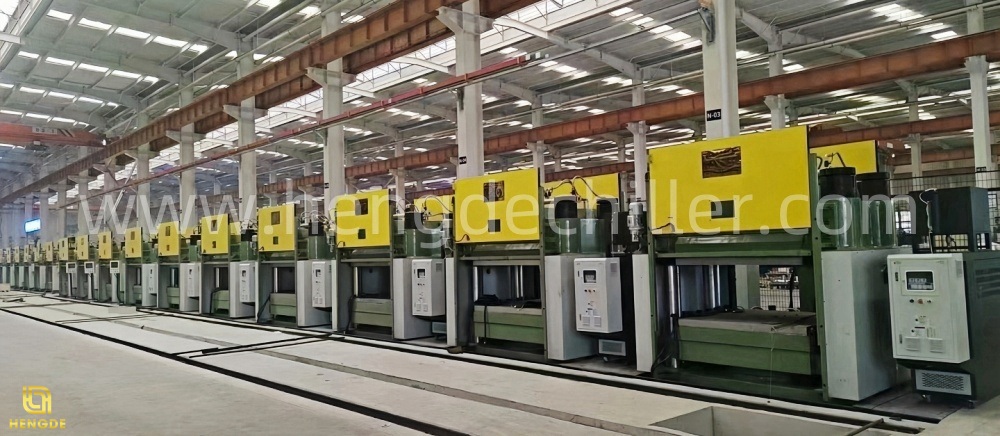
Temperature control is crucial in zinc alloy die casting because it helps maintain consistent mold conditions, supports predictable metal filling and solidification, reduces thermal stress, and improves production repeatability. A suitable system may combine an oil mold temperature controller for mold heating and temperature maintenance with an industrial chiller for cooling other equipment or process circuits.
The correct configuration depends on the alloy, mold design, casting cycle, required temperature range, heat load and cooling-water conditions. There is no single temperature setting or equipment configuration suitable for every die casting line.
During die casting, molten zinc alloy enters a metal mold under pressure. The mold must be hot enough to support proper filling, but it also needs to remove heat effectively so the casting can solidify and the next cycle can begin.
If the mold is too cold in certain areas, the metal may not fill thin sections as expected, potentially causing incomplete features or surface imperfections. If some regions become excessively hot, solidification can become less uniform, increasing the risk of dimensional variation and sticking during part removal. Temperature also affects the repeatability of the production cycle. A mold that starts each cycle at a different temperature may produce different results even when injection settings remain unchanged.
Hengde Insight:Manufacturers sometimes focus on the temperature displayed by the controller while overlooking temperature distribution across the mold. For complex molds, the difference between hot spots and cooler areas may be just as important as the average temperature. Measuring several representative locations during commissioning can reveal problems that a single sensor misses.
Temperature-related problems do not always appear immediately. They may develop gradually as production continues, cooling passages become restricted or the thermal balance changes.
These symptoms can also have other causes, including injection parameters, mold venting, alloy quality and machine condition. Temperature should therefore be investigated as part of the complete process rather than assumed to be the cause of every defect.
A suitable design starts with the production process, not the equipment catalogue. Engineers should identify the mold's operating temperature, the heat introduced during each cycle, the number of molds or circuits served, and the required production rate.
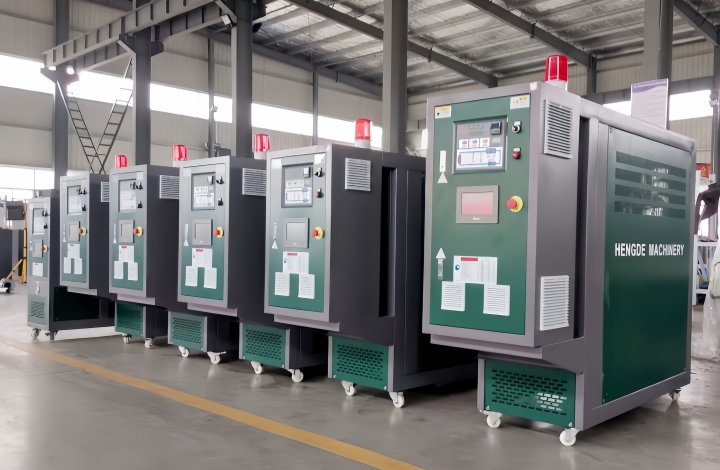
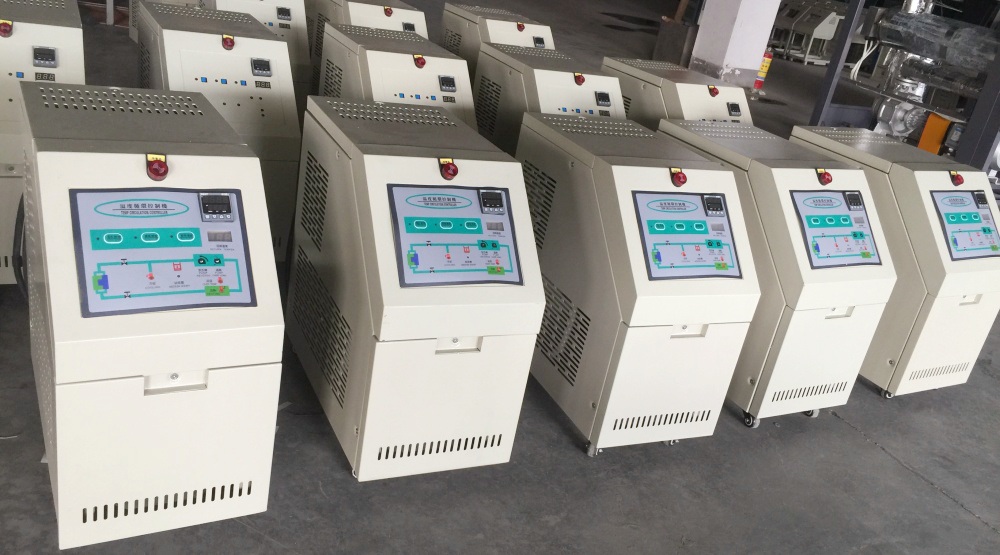
For zinc alloy die casting, an Oil Mold Temperature Controller can circulate heat-transfer oil through the mold circuit to maintain the required operating temperature. Depending on the equipment design, the system can also regulate temperature through controlled cooling.
The following points deserve particular attention:
Hengde Insight: Do not size a temperature control system solely according to the mold's physical dimensions. Two molds of similar size can have very different thermal requirements because of their geometry, cycle time, internal passages and production conditions. Actual process data is a much better basis for equipment selection.
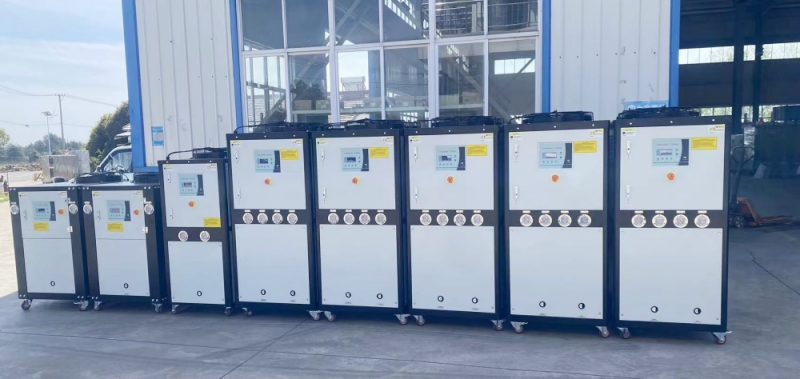
These two types of equipment are often confused, but they serve different purposes. A mold temperature controller primarily circulates a heating or temperature-control medium to maintain the mold at its required operating temperature. An industrial chiller removes heat and supplies cooled water or another specified cooling medium to compatible equipment or process circuits.
| Item | Oil Mold Temperature Controller | Industrial Chiller |
|---|---|---|
| Main function | Heat the mold and maintain its operating temperature | Remove heat from a process or equipment circuit |
| Typical medium | Heat-transfer oil | Usually chilled water or another specified fluid |
| Die casting role | Control mold temperature | Cool compatible auxiliary equipment or process circuits |
| Selection priority | Required mold temperature, flow and pressure | Cooling capacity, outlet temperature and flow |
An Industrial Chiller does not automatically replace a Mold Temperature Controller. The equipment should be selected according to the function required by each circuit, and the two systems may be used together when the production line needs both controlled mold heating and additional heat removal.
Hengde manufactures temperature control equipment for die casting and other industrial applications. One example is the HDDM-10 zinc alloy die casting mold temperature controller, designed for high-temperature mold applications.
| Parameter | HDDM-10 Specification |
|---|---|
| Heating capacity | 18 kW + 18 kW (36 kW total) |
| Heat-transfer medium | Heat-transfer oil |
| Temperature range | Ambient temperature to 350°C |
| Temperature control accuracy | PID ±1°C (as specified by Hengde) |
| Pump power | 0.55 kW + 0.55 kW |
| Power supply | 380 V, three-phase, 50 Hz; customization available |
These specifications provide a concrete reference for evaluating a die casting temperature control unit. The appropriate model still needs to be confirmed against the mold's actual operating temperature, required flow, pressure loss, heating demand and cooling conditions.
Hengde was founded in 2010 and provides industrial chillers, mold temperature controllers and customized temperature control solutions. Its product range covers air-cooled and water-cooled chillers, oil and water mold temperature controllers, and equipment for die casting applications. The company states that it has a 15,000 m² facility and more than 150 employees. For zinc alloy die casting projects, Hengde can assess the required temperature range, circulation conditions and equipment layout to help customers choose a suitable configuration rather than relying on a one-size-fits-all solution.
The required temperature depends on the alloy, mold design, casting geometry and production conditions. Confirm the working range with the process engineer and mold manufacturer rather than applying one setting to every mold.
It depends on the circuit design and required temperature. A standard chiller is intended for cooling and cannot replace the heating function of an oil mold temperature controller. High-temperature mold circuits generally require equipment specifically designed for that duty.
Possible causes include changing cycle times, inconsistent circulation, restricted passages, sensor placement, control settings or variations in the heat load. Check both temperature readings and actual flow conditions.
Provide the supplier with the alloy, mold temperature range, heating demand, cycle time, circulation flow, pressure requirements, available utilities and production schedule. This information helps determine the suitable controller or chiller configuration.
Temperature control is a key part of stable zinc alloy die casting. By maintaining suitable mold conditions, monitoring temperature distribution and matching equipment to the real production load, manufacturers can improve process repeatability and reduce avoidable downtime.
Hengde offers industrial chillers and die casting mold temperature controllers for different temperature-control requirements. With product options such as the HDDM-10 and customized solutions based on operating conditions, Hengde can help manufacturers evaluate the right approach for their zinc alloy die casting processes. Contact the Hengde team with your mold temperature, flow and production requirements to discuss a suitable solution.
WhatsApp : +8618351969707
البريد الإلكتروني : sales@sinohengde.com
عنوان : No.1 Jiangyang Line, Hongqi community, Hengxi Street,Jiangning, Jiangsu, China